The Artemis II mission is a reminder of what humanity is at its best: A cooperative and rational species capable of mastering complexity.
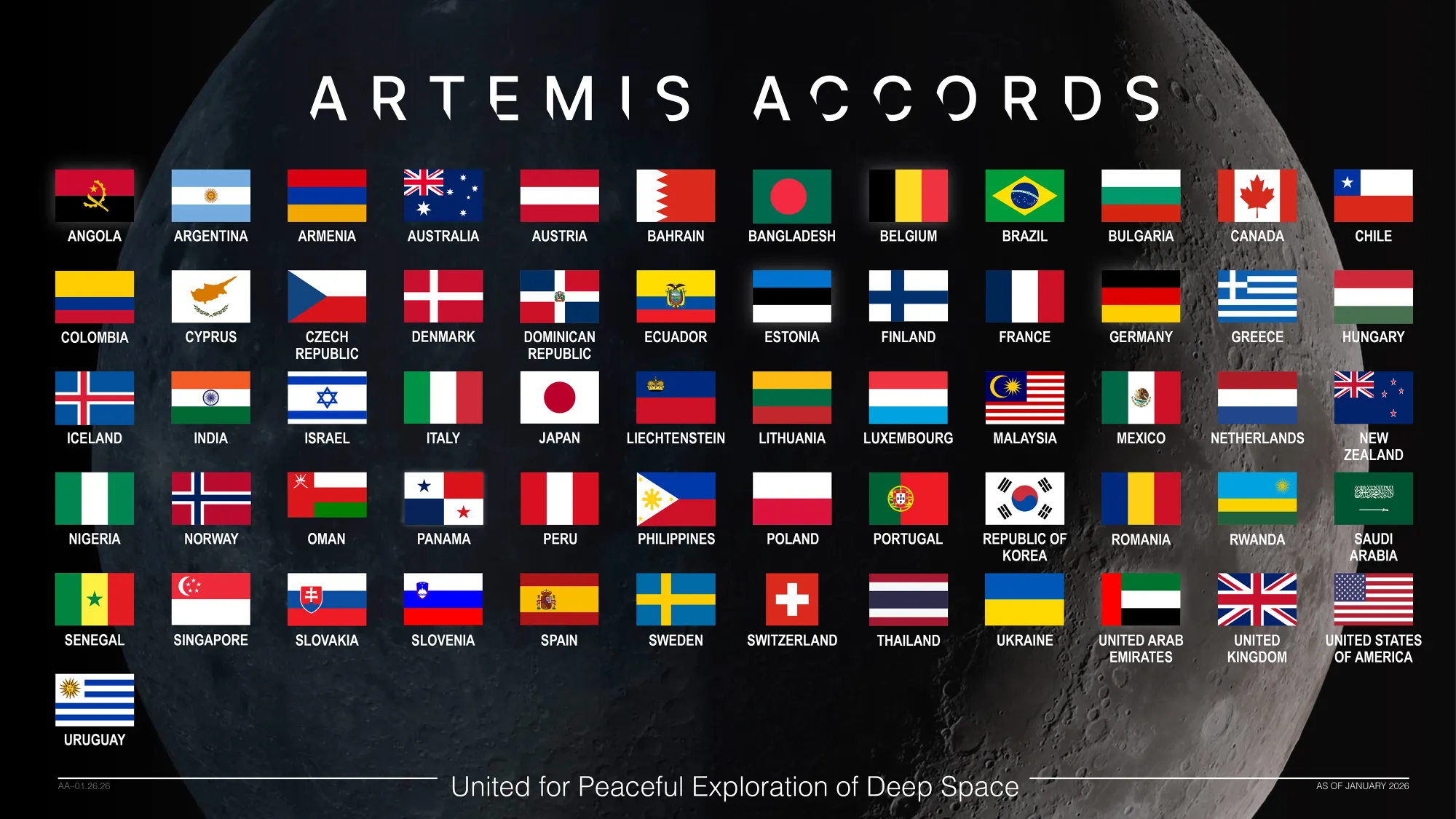
Vast cooperation was required to make the mission possible. 60 countries are part of the Artemis Accords, established in 2020. Thermal control and propulsion for the Orion spacecraft are provided by the European Service Module. 10 European countries participated in the creation of the module, and the European Space Agency is supporting the mission from the ESA technical centre in the Netherlands and the ESA European Astronaut Centre in Germany. The crew is multinational, with Canadian Space Agency Astronaut Jeremy Hansen and NASA Astronauts Reid Wiseman, Victor Glover, and Christina Koch set to travel further from the Earth than any human beings in history. Thousands of workers in factories, science and engineering labs, and maintenance facilities were essential to getting Artemis II off the ground.
A rebuke to authoritarian fear and delusion
Authoritarian leaders like Donald Trump demand sole credit for the accomplishments of others, try to turn us against each other, and cast cooperation as weakness. This perspective is erroneous. Yet leaders who push that erroneous perspective benefit from the fear and isolation it creates. The more narrow our world becomes, the more authoritarians can put themselves forth as saviours – if only we give all our power and agency to them. They want us small and fearful, so they can feel big and secure. The Artemis II mission is a rebuke to that way of thinking. The mission would not have been possible without multinational cooperation. The astronauts must have trust in themselves, in each other, in mission control, in maintenance crews, and in the engineers, scientists, and doctors involved at every step of the way. Artemis II is also a rebuke to delusional thinking. A politician or pundit can get away with lies – though those lies damage society. A rocket cannot be built on lies, nor can it leave Earth’s orbit on lies. Every step of the way, the Artemis II mission must adhere to reality. Problems had to be solved, not wished away. Obstacles had to be acknowledged and overcome, not ignored.
That is what makes human spaceflight such an achievement. By facing reality head-on, humanity innovates, grows, and becomes stronger. Rationality, when combined with heroic determination and courage, is a powerful and inspiring force. This is what draws so many people to spaceflight. It’s what makes the launch of a rocket into a unifying global moment, and what makes astronauts heroic figures. Getting human beings into space demands and brings out the best in our species: Our capacity for trust and cooperation, our physical and intellectual courage, our perseverance, our ability to learn and understand the world, and our desire to explore. And while we aren’t all going to the moon, the best of humanity exists within you.
Spencer Fernando
This article handled today's question. The Long Work, my Patreon, is where I take the longer view: three columns a week, one of them free, funded entirely by readers.
Joining is free.