American influence runs up against limits.
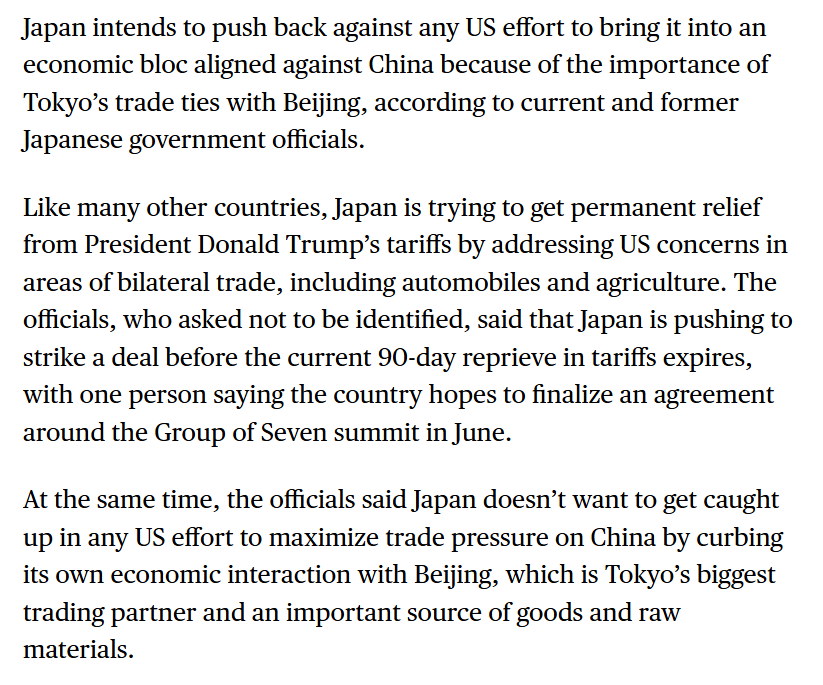
As the United States seeks to create an ‘anti-China’ trade bloc, Japan is indicating it will not take part.
As noted by Joe Weisenthal, Japan views China as too important a trading partner:
Weakened leverage
In the year 2000, America was the largest trading partner for most countries.
Now, it’s China:
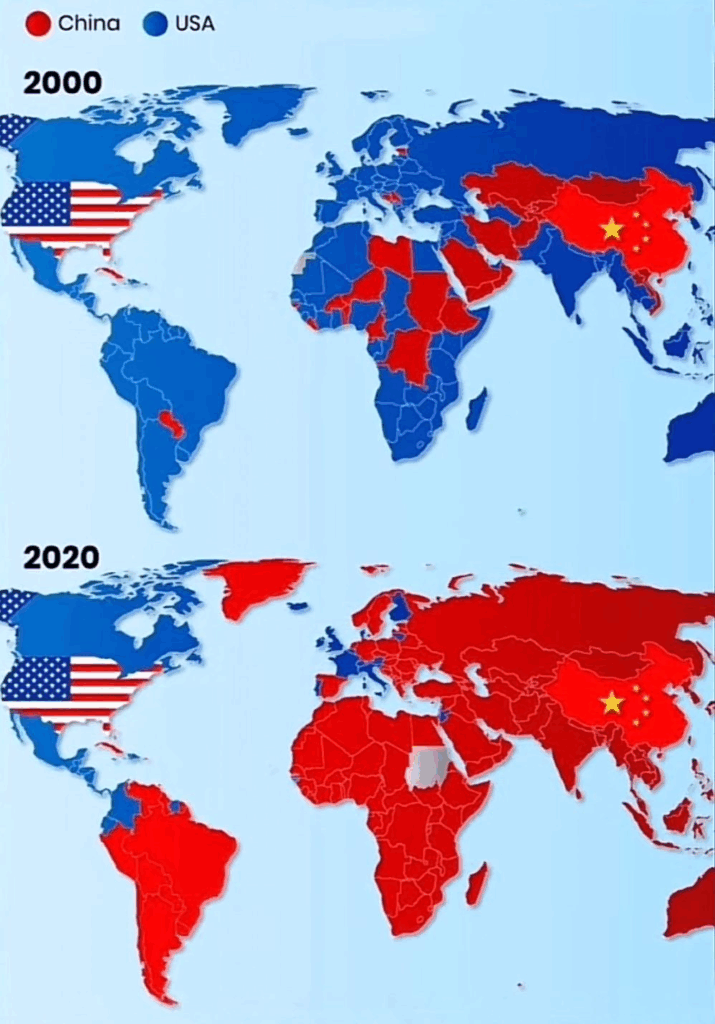
This weakens American leverage.
Perceptions of American belligerence and erratic leadership have eroded confidence in the United States and generated domestic political backlashes in targeted countries. As a result, even nations ideologically predisposed to ally with America are looking elsewhere.
This reduces the likelihood of a unified anti-China trade bloc.
What This Means for Canada
Canada was isolated early on in the second Trump Administration. The U.S. had initially targeted Canada, Mexico, and China with tariffs, and reserved much of its most aggressive rhetoric for Canada.
Since then, the U.S. has declared a trade war on nearly every nation. Despite seeking to ‘pick off’ countries one by one, few are willing to adhere to ever-changing American terms.
This gives Canada time and space to find new trading partners as pressure accumulates within the U.S. political and economic system. American political and corporate elites, along with broad public opinion, are turning against Donald Trump, weakening his negotiating position.
Letting this process play out raises the odds that whatever deal Canada signs with the U.S. will be favourable to Canadian national interests.
Spencer Fernando
Image – YouTube
On Patreon, I create more content for a strong and sovereign Canada.
Prefer a one-time contribution? You can give via PayPal.