One of the arguments used to defend the high-tariff policy of the Trump Administration is that they are ‘rebalancing’ US trade and matching the high-tariff policies of key U.S. trading partners.
In doing so, they point to specific tariffs or non-tariff trade barriers in select industries. Canada’s supply management system and tariffs on dairy products from the U.S. are often targeted, even though U.S. dairy imports have never reached the level necessary for tariffs to kick in.
The Trump Administration targets these specific tariffs and barriers to create the impression that the U.S. is being unfairly restricted from selling into foreign markets. Then, high U.S. tariffs are sold as a ‘reciprocal’ measure to create fairer trade, a narrative that holds potent political power.
Yet, that narrative is false.
Tariffs have been coming down for decades across the globe, and much of global trade is either tariff-free or almost tariff-free.
Consider the chart below created by University of Michigan economics professor Justin Wolfers:
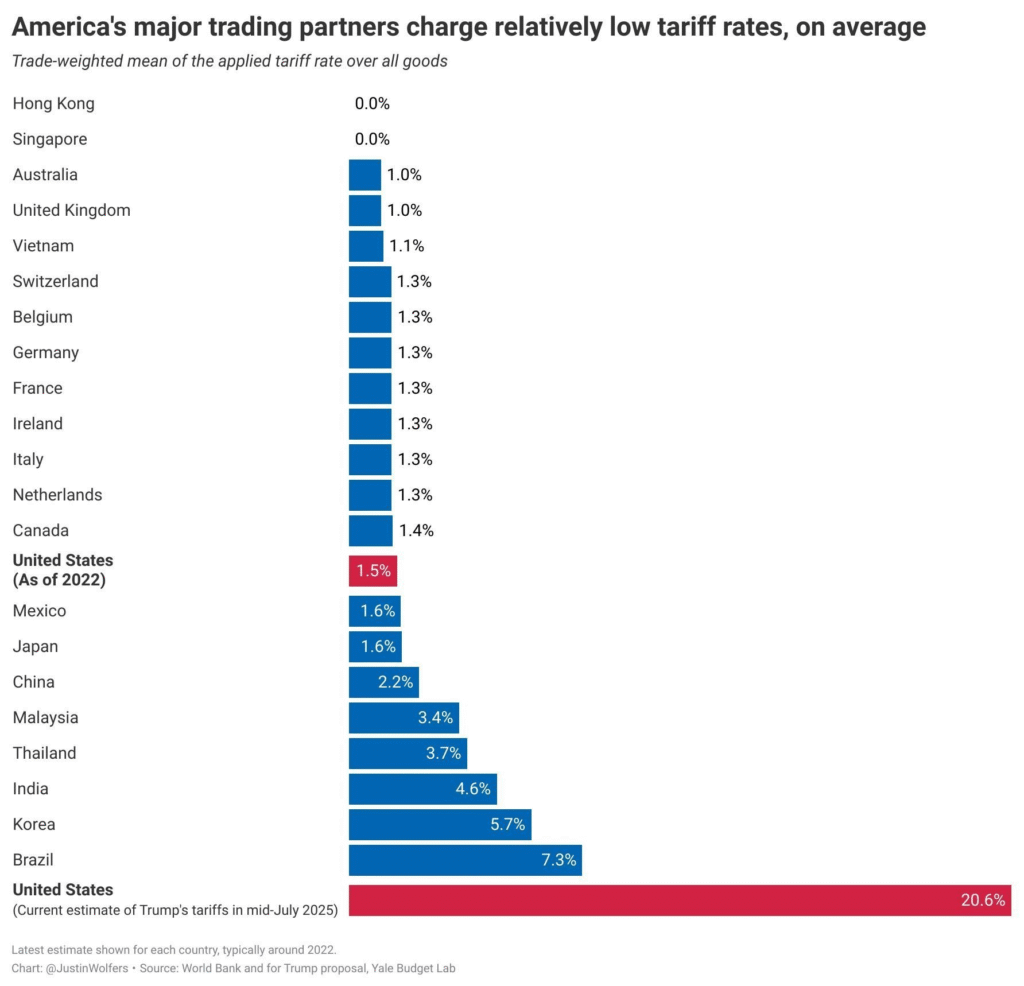
As you can see, the U.S. charged higher tariffs than Canada during the Biden Administration by a narrow margin, though both countries were close to 0%. Even ‘high-tariff’ nations like Brazil charged under 10% on average.
Meanwhile, the post ‘liberation day’ tariff policy of the United States is a clear outlier. With the U.S. now imposing an average tariff rate above 20%, any notion of ‘reciprocity’ has gone out the window.
The truth is that before the second Trump Administration, trade between the U.S. and its allies was largely reciprocal. To the extent there were unfair barriers by either side, those barriers could have been managed by careful negotiations and subtle tweaks. Instead, the U.S. has chosen to undo decades of trade liberalization (which coincided with rapid income growth around the world) and revert to a pre-Second World War high-tariff policy.
Spencer Fernando
On Patreon, I create more content for a strong and sovereign Canada.
Prefer a one-time contribution? You can give via PayPal.